
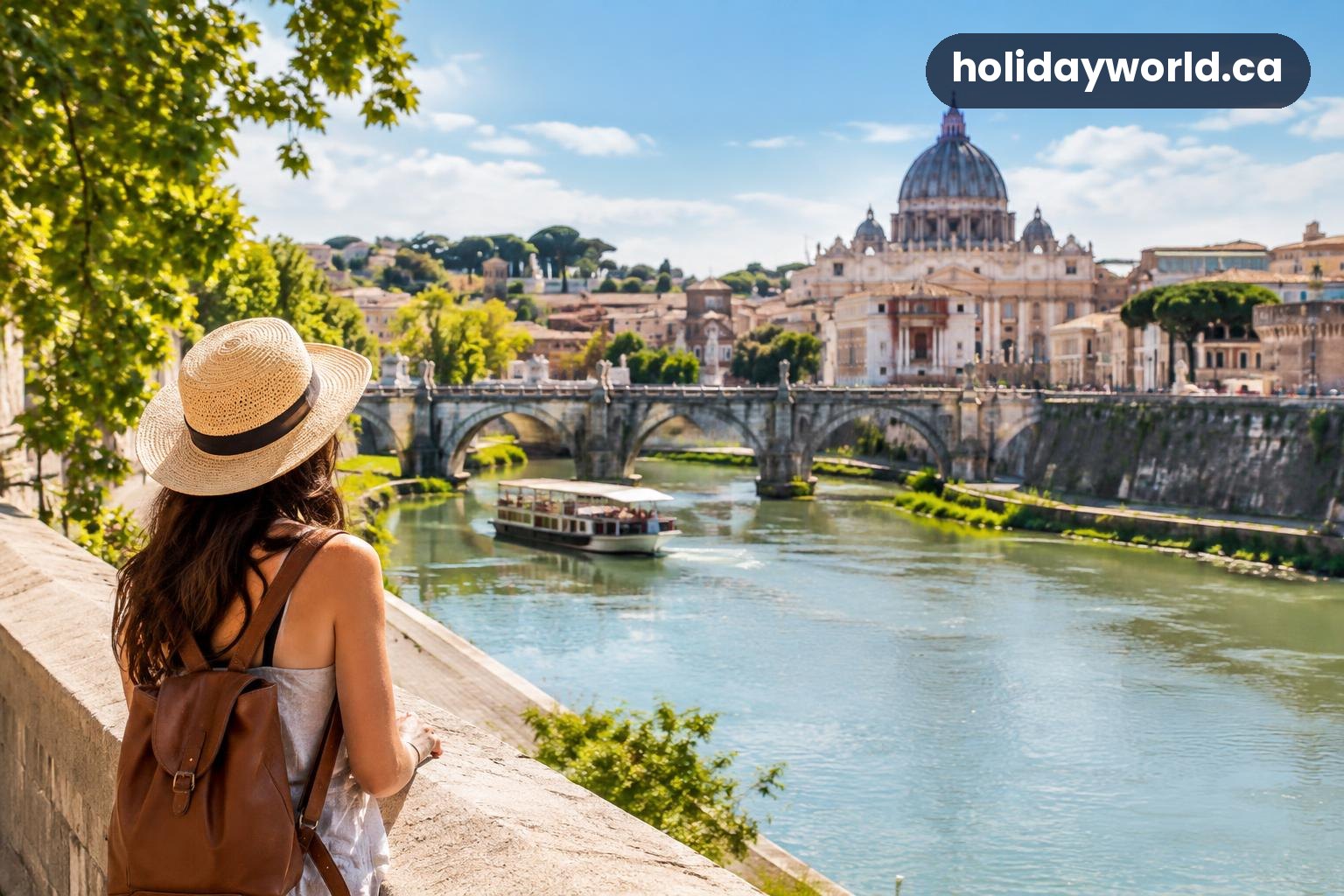
Italy can be done on a sensible budget if you plan the route well, stick to regional trains, and spend more time in walkable cities than on expensive transfers. For Canadians, a two-week trip can work especially well from Toronto, Montreal, Vancouver, Calgary or Edmonton, with flights to Rome, Milan, Venice or Naples often priced around $900 to $1,600 return in shoulder season and higher in summer, depending on timing and baggage. The best value usually comes in spring or fall, when weather is milder, crowds are thinner and hotel rates are often easier on the wallet. This itinerary is for Canadians who want a full, varied Italy trip without drifting into luxury-country prices.
Why Italy works well on a budget
Italy has a few big advantages for budget travellers. Intercity trains are extensive, city centres are easy to explore on foot, and many of the best experiences cost little or nothing. You can build a trip around public squares, churches, market visits, neighbourhood walks and long lunches from bakeries or grocery counters instead of restaurant splurges every day.
There are still places where costs climb quickly. Venice, central Florence, Lake Como and some Amalfi Coast towns can be expensive for rooms and meals. That doesn’t mean you should skip them. It just means you may want to use them as shorter stops, stay just outside the most expensive cores, or pair them with lower-cost bases such as Bologna, Lucca, Naples or Rome’s outer neighbourhoods.
The key is balance. Spend on the experiences that matter most to you, then keep transport and hotel choices practical. Italy rewards travellers who move slowly enough to notice what is around them.
Best time to visit for lower prices and comfortable weather
The best seasons for a budget trip are usually April to early June and September to October. In those months, you’ll generally get warmer days, manageable crowds and better room rates than in peak summer. Spring can bring fresh green landscapes and comfortable city walking. Fall often has clear skies, harvest menus and pleasant evenings.
July and August are the most expensive and busiest months. Heat can be intense in Rome, Florence, Naples and Sicily, and some beach areas fill up fast. If those are your only travel windows, book early and expect to pay more for flights and central rooms.
November to March can be the cheapest stretch, especially outside the holiday period. The trade-off is shorter daylight, cooler weather and the chance of rain. Cities stay rewarding, but some coastal or island destinations feel quieter. For Canadians looking mainly for value, March, late October and early November are often sweet spots.
Getting there from Canada
From Canada, the simplest gateways are usually Rome, Milan, Venice or Naples. Travellers leaving from Toronto and Montreal often find the widest choice of itineraries, while Vancouver, Calgary and Edmonton usually mean a connection in another European city. Flight times depend on your routing, but Canada-to-Italy journeys are commonly about 8 to 12 hours in the air for the longest leg, plus connection time if needed. Check current schedules before booking.
For fares, a rough return range from major Canadian airports is often around $900 to $1,600 in shoulder season and $1,300 to $2,200 or more in summer, though sales can fall below that and peak dates can climb higher. Watch baggage rules closely, since some lower fares only include a small carry-on. If you’re planning to use Italy’s trains heavily, an extra checked bag can become a nuisance. Packing light saves money and time.
If you want the most efficient route, open-jaw tickets can help. For example, fly into Rome and home from Milan, or into Venice and home from Naples if that suits your route. That can reduce backtracking and save a full day.
Two-week Italy itinerary on a budget
Days 1 to 3 in Rome
Start in Rome because it’s a strong introduction to Italy and easy to reach from Canada. Three nights gives you time for the major landmarks without rushing. Spend one day around the Colosseum and Roman Forum, another in central Rome with the Pantheon, Piazza Navona and the Trevi area, and a third wandering Trastevere or the area around the Spanish Steps and the Villa Borghese park.
To save money, use a few essentials wisely. Many churches are free to enter, fountains and squares cost nothing, and city walking is the best way to absorb the place. A basic meal plan can work well here: breakfast from a café, a lighter lunch, then a more relaxed dinner. Rome is one of the easier cities in Europe for doing a lot without paying for every activity.
Days 4 to 5 in Florence
Take a train to Florence and stay two nights. It’s compact, so you can see a lot without buying transport passes or taxis. The Duomo area, the Ponte Vecchio, Piazza della Signoria and the views from Piazzale Michelangelo are the core highlights. If you want a museum splurge, choose one major collection and leave the rest for another trip.
Florence can be pricey for hotels, so location matters. Consider staying just outside the most touristed centre if you’re comfortable with a short walk or tram ride. You’ll often find better value while still remaining close to the sights. For budget meals, bakeries, pizza al taglio and simple trattorie are your friends.
Days 6 to 7 in Bologna
Bologna is one of Italy’s smartest budget stops. It has a university-town feel, excellent food and fewer crowds than Florence or Venice. Two nights is enough to enjoy the porticoes, the central squares and the local rhythm. It also works well as a base for a day trip if you want one, though even staying put is worthwhile.
Compared with some of Italy’s headline cities, Bologna can be kinder to your wallet. Rooms are often more reasonable, and the dining scene ranges from modest to upscale. You don’t need to spend a lot to eat well here. The city also connects easily by train, which keeps the overall itinerary efficient.
Days 8 to 9 in Venice
Venice is not cheap, but it is one of the places many travellers still want on a first trip. Two nights is a sensible compromise. That gives you time for the canals, St. Mark’s Square, the Rialto area and one slow evening after the day-trippers leave. Early mornings and late afternoons are the best times to walk the city without feeling squeezed by crowds.
For a budget stay, look beyond the most expensive core. Areas on the main island away from the centre, or practical bases on the mainland such as Mestre, can reduce costs. Just factor in extra transit time. If Venice is mainly a dream stop on your list, this is where a shorter stay helps keep the whole trip affordable.
Days 10 to 11 in Verona or Lake Garda
After Venice, choose either Verona or Lake Garda depending on your interests. Verona is a compact city with Roman sites and a good walking centre. Lake Garda gives you water views, ferry options and a slower pace. Both can be done on a budget if you avoid the most expensive lakeside resorts.
Verona tends to be the simpler choice for travellers who want a straightforward city stop and an easy train connection. Lake Garda is better if you want a change of scenery and don’t mind a bit more planning. If you choose the lake, consider staying in a smaller town rather than a prestige resort village.
Days 12 to 14 back in Rome or Milan
Use the last two or three days to return to a major transport hub. Rome works well if you want a final city base with lots of departure options. Milan can be better if your return flight is cheaper from northern Italy or if you want to squeeze in some shopping and a final museum stop.
This final stretch is also useful for absorbing delays. Train schedules, weather and fatigue can all interfere with a perfectly packed itinerary. Leaving one flexible city segment at the end keeps the trip calmer and often cheaper than trying to connect directly from a smaller town to the airport on departure day.
Where to stay on a budget
For a two-week trip, your accommodation strategy matters as much as your sightseeing plan. In Rome, look at areas with strong transit access such as Termini, Monti or Trastevere, depending on your comfort level and budget. In Florence, staying a bit beyond the most touristed core can trim costs. In Venice, consider whether a mainland base makes sense for your trip. In Bologna, the central area is convenient and often better value than Florence or Venice.
If you’re using trains, staying near stations can save time and taxi money. If you prefer a quieter night’s sleep, choose neighbourhoods a short walk away from the busiest streets. Apartments and guesthouses can be useful for longer stays, especially if you want a kitchen for breakfast and occasional simple dinners. Just compare the total price after cleaning fees and local taxes.
As a rough guide, budget rooms or simple guesthouses can run about $120 to $220 a night, mid-range hotels about $180 to $350 a night, and apartments may fall anywhere within that span depending on city, season and fees. Check current prices before you commit, since rates move quickly.
Budget breakdown for two weeks
- Return flights from Canada: roughly $900 to $1,600 in shoulder season, $1,300 to $2,200 or more in summer.
- Accommodation: about $1,700 to $4,900 total for 14 nights, depending on city mix, room type and season.
- Trains between cities: roughly $150 to $350 total if booked ahead, more if you leave it late.
- Food and drinks: about $50 to $90 per day for a traveller keeping things modest, or $700 to $1,250 total.
- Sightseeing and entry fees: roughly $100 to $300 total, depending on how many paid attractions you choose.
- Local transit and small extras: about $60 to $180 total.
- Total for two weeks: roughly $3,800 to $8,600 per person, before shopping and optional splurges.
Those figures can vary a lot by season, flight pricing and how central you stay. A traveller who books early, keeps the route efficient and chooses simpler meals can land on the lower end. Someone travelling in July with high hotel prices will pay more.
Practical tips for Canadians
- Book trains early. Italian rail fares are often much cheaper when purchased in advance, especially for popular routes.
- Travel with one carry-on if you can. Moving through stations and city streets is much easier with less luggage.
- Keep a mix of cash and card. Cards are widely accepted, but small purchases and local incidents still happen.
- Watch for city taxes. Many Italian accommodation stays include a local tax paid at check-in or check-out.
- Stay aware of rail strikes or schedule changes. They are not common every day, but they do happen. Check closer to departure.
- Buy tickets from official sources where possible. That helps avoid confusion with resellers and makes changes easier.
- Plan for comfortable walking shoes. Italy’s cities are best seen on foot, and cobblestones are hard on flimsy footwear.
- Check entry requirements before you go. Passport, visa, health and safety guidance can change. Review the Government of Canada travel advice at travel.gc.ca and confirm official requirements before booking and again before departure.
Frequently asked questions
Is two weeks enough for Italy?
Yes, if you keep the route focused. Two weeks is enough for a good first trip that covers a few major cities and one or two smaller stops without feeling rushed.
What is the cheapest way to get around Italy?
Regional and high-speed trains are usually the most practical budget option between cities. In cities, walking and public transit are often enough.
Can I do Italy on $4,000 from Canada?
It’s possible, but tight. You would need to catch a good flight fare, avoid peak season, stay in lower-cost areas and keep restaurant spending modest.
Which Italian cities are best for budget travellers?
Rome, Bologna and Verona are often easier on the wallet than Venice or Florence. That said, even expensive cities can work if you shorten your stay or choose outer neighbourhoods.