
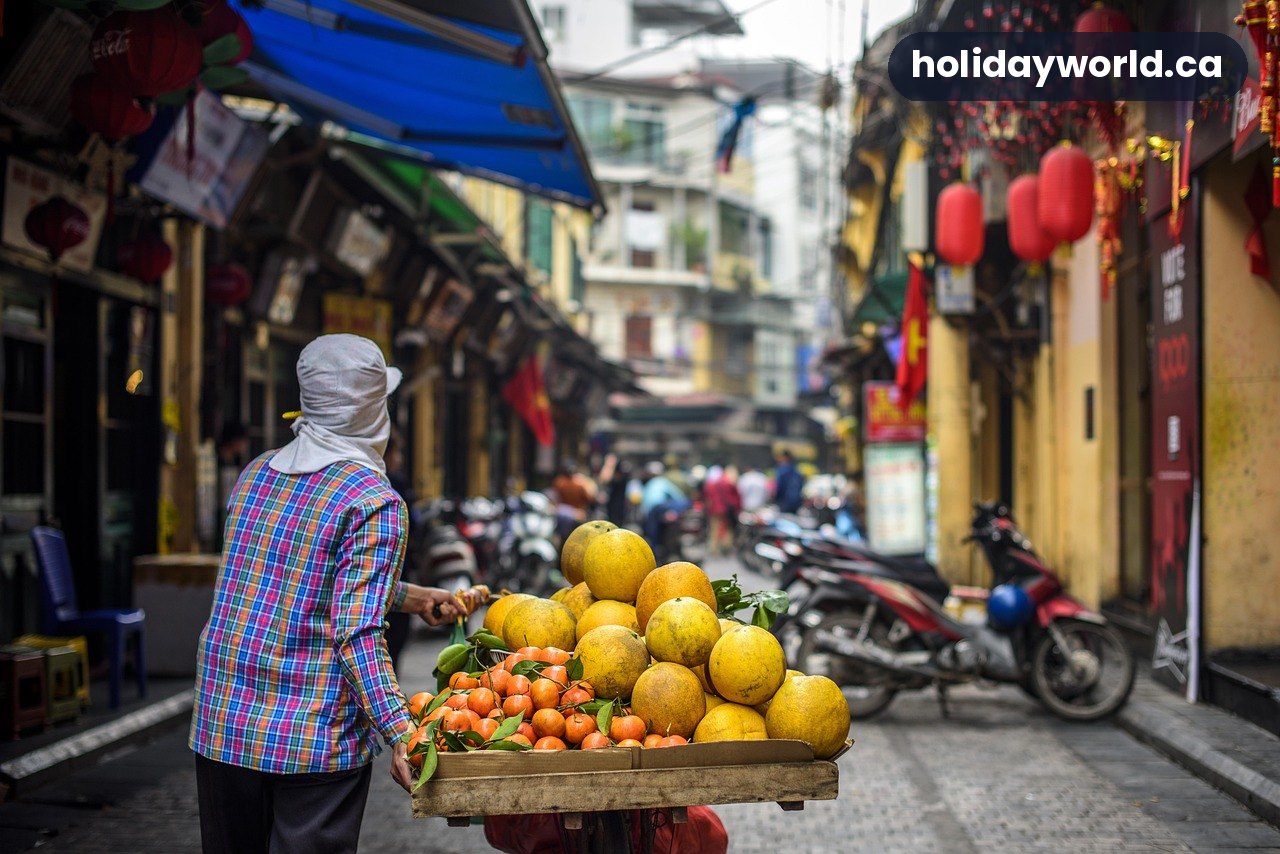
Vietnam is a strong choice for Canadian travellers planning their first big trip to Asia: the food is excellent, the hotel value is often better than in many long-haul destinations, and a two-week route gives you enough time to see Hanoi, Ha Long Bay, Hoi An and Ho Chi Minh City without rushing every day. From Toronto, Vancouver, Montreal, Calgary or Edmonton, expect a long journey and plan on a budget that often starts around $2,800 to $5,500 per person for flights, hotels, intercity transport and daily spending, depending on season and how comfortably you travel. Check current prices before you book, since airfares and hotel rates can move a lot.
Why Vietnam works well for a first trip
Vietnam gives first-time visitors a clear mix of city energy, old neighbourhoods, coastal scenery and easy day trips. You can spend one day walking under French-colonial façades and the next out on the water among limestone cliffs. The country is long and narrow, so the route naturally breaks into northern, central and southern sections, which makes planning simpler than it first looks.
For Canadians, the value is part of the appeal. Street food, local transport and mid-range hotels can be quite affordable by Canadian standards, while higher-end stays still tend to cost less than comparable options in many other destinations. The trade-off is distance. A first visit works best if you accept a slower pace and build in a few transit days.
If you like history, food, café culture and a mix of urban and coastal stops, Vietnam fits well. It also works for solo travellers, couples and parents travelling with older children who are comfortable with long flights and busy streets.
Best time to visit
Vietnam’s weather varies a lot from north to south, so there isn’t one single best month for the whole country. For a two-week first trip, many Canadian travellers find late autumn through early spring easiest overall, especially November to April, when much of the route is drier and more comfortable.
North Vietnam around Hanoi and Ha Long Bay can feel cool and misty in winter, which some travellers like, but it can also be damp. Summers are hot, humid and more prone to heavy rain.
Central Vietnam around Da Nang and Hoi An is often best in the spring and early summer, while late autumn can bring wetter weather. South Vietnam around Ho Chi Minh City is warm year-round, with a wet season that usually runs through much of the summer.
If your trip dates are fixed, don’t worry too much. Just match your packing to the region. Light layers, a rain jacket and breathable clothing help in most seasons.
Getting there from Canada
There are no guaranteed direct flights from Canada to Vietnam every day, so most travellers connect through major Asian hubs or sometimes through Europe or the Middle East. From Vancouver, the total journey is often shorter than from eastern Canada. From Toronto or Montreal, the trip can be longer and may require two flights with a layover. From Calgary or Edmonton, expect at least one connection as well.
For a first trip, it helps to fly into one city and out of another if the fare is reasonable. An open-jaw ticket into Hanoi and out of Ho Chi Minh City, or the reverse, can save backtracking and make the route more practical.
As a rough planning figure, many round-trip economy fares from Canada to Vietnam fall around $1,300 to $2,400 CAD, sometimes higher in peak periods or when booking late. Premium economy and business class cost more. Check current schedules and fares before you buy, and compare baggage rules carefully.
Before departure, review the Government of Canada’s travel advice at travel.gc.ca and make sure your passport, visa status and any entry rules are in order. Requirements can change, so confirm with official sources close to your travel date.
Two-week itinerary for first-time visitors
Days 1 to 3 in Hanoi
Start in Hanoi, Vietnam’s capital, where lakes, tree-lined boulevards and dense old streets set the pace. Give yourself time to adjust to the time difference and to the traffic. The Old Quarter is the most useful base for a first stay because many sights, cafés and simple restaurants are within walking distance or a short ride away.
Spend one day exploring the Old Quarter and Hoan Kiem Lake area. Another day can be used for the Temple of Literature, the Ho Chi Minh complex and a slower café-focused afternoon. If you enjoy museums, build one into the schedule rather than trying to stack too many sights into one day.
Eating here is part of the trip. Look for pho, bun cha, egg coffee and fresh bánh mì from well-known local spots, but keep expectations practical: not every place will be fancy, and that’s part of the appeal.
Days 4 to 5 in Ha Long Bay
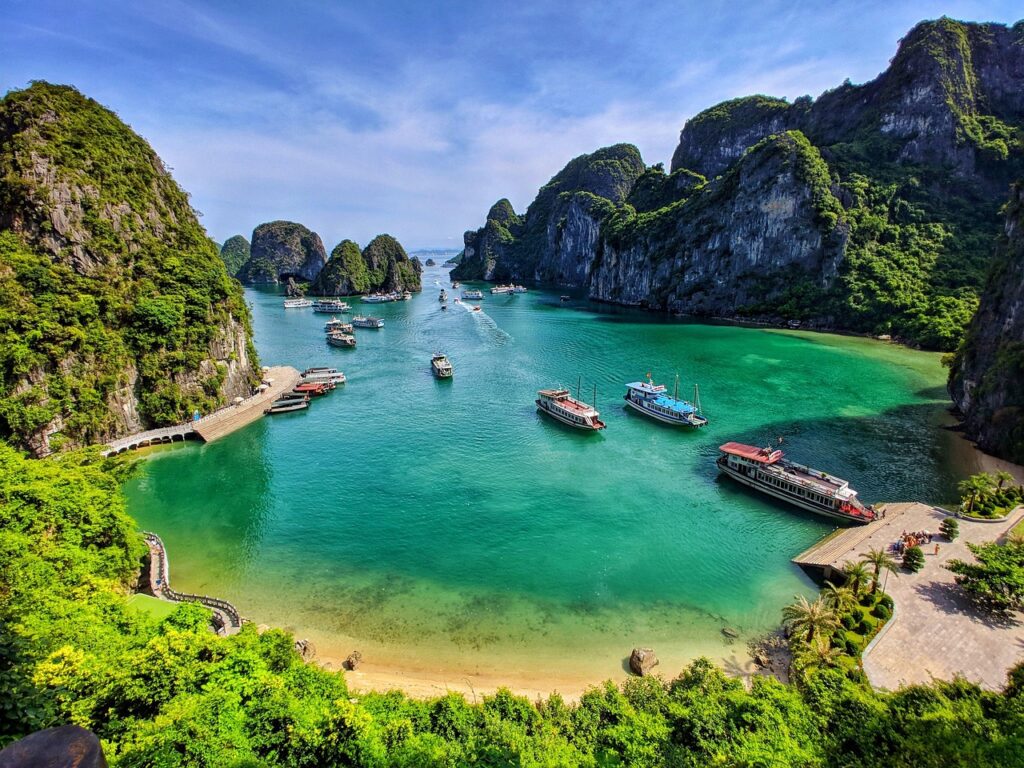
From Hanoi, most first-time travellers head to Ha Long Bay for an overnight cruise or a two-day stay. The bay is one of Vietnam’s best-known landscapes, with limestone karsts rising from calm water. A one-night cruise usually feels enough for a first trip, especially if you’d rather keep moving south.
Choose a reputable operator and confirm what’s included before booking. Some cruises cover transfers, meals and kayaking, while others do not. Prices vary widely, but a mid-range overnight cruise often lands around $180 to $450 CAD per person, with premium options costing more.
If you prefer less time on the water, you can return to Hanoi after a day cruise. The overnight option is better if you want a slower pace and a sunrise on the bay.
Days 6 to 8 in Hoi An
Fly or travel south to central Vietnam and base yourself in Hoi An. This is one of the easiest places in the country for first-time visitors to enjoy on foot or by bicycle. The lantern-lit old town is compact, and the river setting gives the area a quieter feel than Hanoi or Ho Chi Minh City.
Use one day for the old town, one for food and shopping, and one for a nearby beach or countryside outing. The Japanese Covered Bridge, merchant houses and riverside lanes are the classic highlights. If you want a break from sightseeing, Hoi An is a good place to slow down for a couple of nights.
Tailoring is one local draw, though you’ll want to allow enough time for fittings and adjustments if you plan to order clothing. Not every traveller needs that, but many first-timers enjoy the easy pace here.
Days 9 to 10 around Da Nang
Da Nang makes a practical stop between Hoi An and your next flight south. Some travellers stay here instead of Hoi An, but for a first trip the two work well together. Da Nang has a longer beach, a more modern city feel and straightforward access to the Marble Mountains and the coast.
If your timing fits, use Da Nang for a beach day or a short excursion. It’s also a convenient place to reset before the final stretch to Ho Chi Minh City. A half-day around the shoreline is enough for many travellers who want balance rather than a beach-only holiday.
Days 11 to 14 in Ho Chi Minh City
Finish in Ho Chi Minh City, Vietnam’s largest city and one of its most energetic. It’s a place of wide boulevards, dense motorbike traffic, war history, rooftop bars and busy markets. Give yourself time to absorb it in layers rather than trying to treat it as a quick stop.
Plan at least one day for central districts, including the Notre-Dame area, the Central Post Office and the war history museums that interest you. Another day can be used for a food-focused walk, a market visit or a slower café day. If you want a day trip, the Cu Chi tunnels are the classic choice, though they’re a long outing and not for everyone.
For many Canadians, the southern finish works well because it ends the trip with strong flight connections and a final cluster of big-city comforts before the journey home.
Where to stay
For a first visit, area choice matters more than hotel brand. In Hanoi, the Old Quarter is the most practical base if you want walking access to cafés, street food and major sights. If you prefer a slightly calmer setting, look near Hoan Kiem Lake or the French Quarter.
In Hoi An, staying close to the old town or along the river gives you easy evening access to the lantern-lit streets. If you’d rather have more space and beach time, look a little farther out and plan on short rides into town.
In Ho Chi Minh City, most first-timers do well in District 1, where you’re close to major landmarks, dining and transport. Some travellers also like nearby District 3 for a slightly less hectic feel while still staying central.
For budget planning, expect roughly $35 to $80 CAD a night for simple private rooms or basic hotels, $90 to $180 CAD a night for solid mid-range places, and more for upscale stays. Prices vary by season and location, so check current rates before booking.
Budget for two weeks
A comfortable two-week trip to Vietnam from Canada can be done on a range of budgets. The biggest costs are usually international flights and your intercity transport. Food and local transport are often more manageable than many travellers expect.
- International flights: roughly $1,300 to $2,400 CAD round trip per person
- Domestic flights or long-distance trains: roughly $120 to $450 CAD total, depending on route and booking time
- Hotels: roughly $500 to $1,600 CAD total for two weeks in budget to mid-range accommodation
- Food: roughly $20 to $60 CAD a day if you mix street food, cafés and casual restaurants
- Local transport: roughly $5 to $20 CAD a day for rideshares, taxis and occasional transfers
- Ha Long Bay cruise: roughly $180 to $450 CAD per person for an overnight option
- Entry fees, tours and extras: roughly $100 to $400 CAD total, depending on your sightseeing style
For a realistic total, many travellers will spend around $2,800 to $5,500 CAD per person for two weeks, not including shopping or major upgrades. Travelling in shoulder season, booking flights early and choosing a simpler hotel mix can bring that down. A more relaxed pace with nicer hotels and guided day trips will push it up.
Practical tips for Canadians
- Check visa and entry rules early. Requirements can change, and the rules may depend on your passport and trip length. Confirm details with official government sources before you book.
- Plan for humidity. Lightweight clothing, a compact umbrella and a good water bottle make the trip easier, especially in the south and in summer months.
- Bring a mix of payment options. Cash is still useful for markets, small meals and taxis, while cards are more widely accepted in hotels and larger businesses.
- Use ride-hailing where available. It can be simpler than negotiating every taxi fare, especially after a long flight or late at night.
- Allow time between cities. Vietnam looks straightforward on a map, but airport transfers, check-ins and traffic take time.
- Stay cautious with street crossings. In the biggest cities, traffic can feel intense at first. Walk steadily and predictably.
- Keep travel insurance in place. Make sure it suits your age, health and planned activities, especially if you’re taking multiple flights or a cruise.
- Book the first and last nights with care. A central hotel can reduce stress when you’re arriving tired or heading to the airport early.
Frequently asked questions
How many days do you need for a first trip to Vietnam?
Two weeks is a good starting point. It gives you time for Hanoi, Ha Long Bay, central Vietnam and Ho Chi Minh City without turning the trip into a constant transit exercise.
Is Vietnam expensive for Canadians?
Vietnam can be very reasonable once you arrive, but flights from Canada are a major expense. Budget travellers can keep daily costs fairly low, while mid-range travellers still often find good value compared with many other long-haul destinations.
What’s the easiest route for a first visit?
Many first-timers do well with a north-to-south route: Hanoi, Ha Long Bay, Hoi An or Da Nang, then Ho Chi Minh City. It reduces backtracking and matches the country’s geography.
Do I need to worry about weather across the whole country?
Yes. Vietnam’s climate changes by region, so a month that works well in the north may not be the best time for the south. Check the forecast for each stop and pack for heat, rain or cooler evenings depending on your route.