
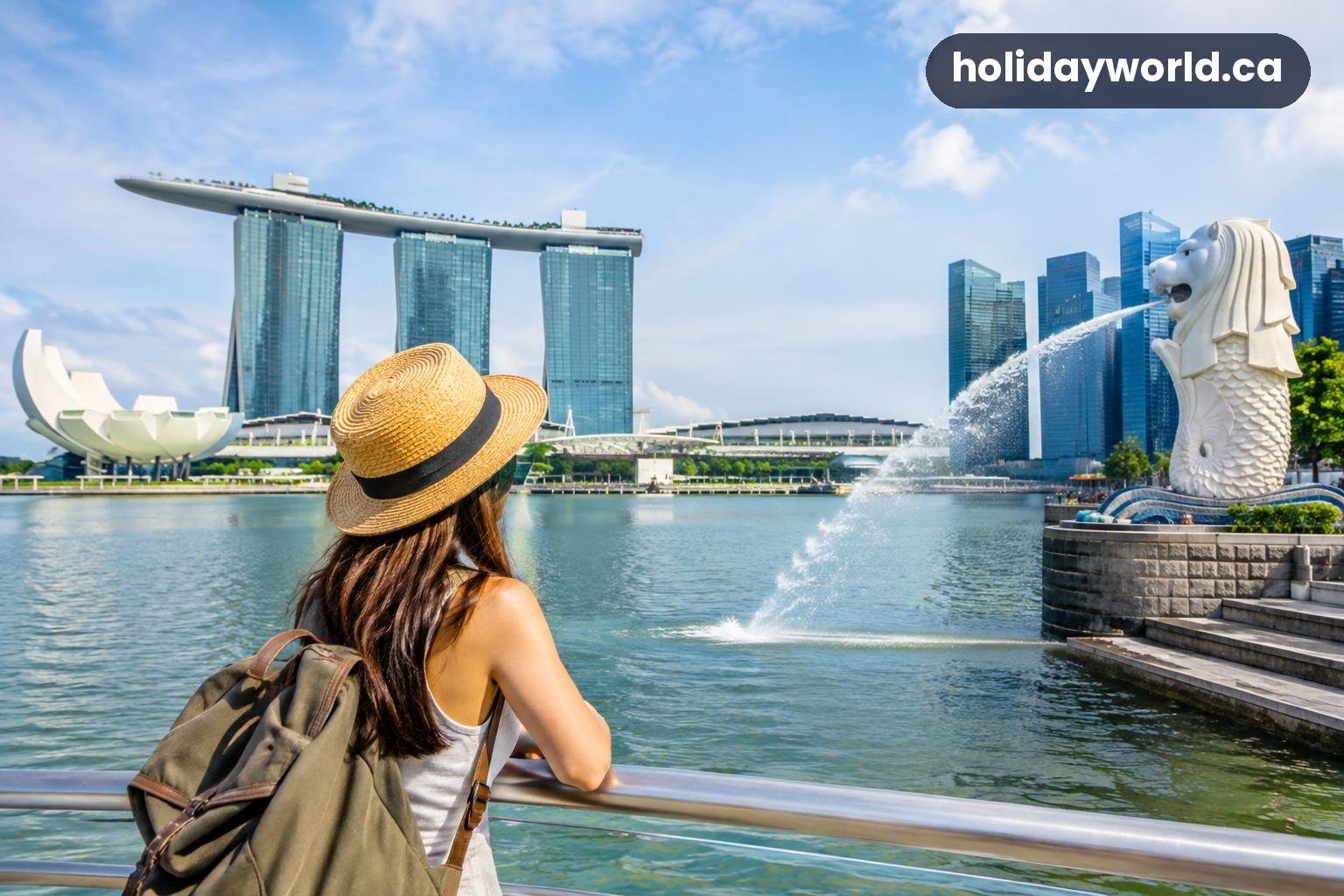
Singapore is a smart first stop in Asia for Canadian travellers who want an easy place to land, a strong transit system, excellent food and a city that feels comfortable without being boring. It works well for couples, solo travellers and families, especially if you want to combine skyline views, neighbourhood walks, hawker stalls and a day trip or two without changing hotels every night. From Toronto, Vancouver, Calgary or Montreal, expect a long-haul flight and a total trip cost that often lands in the mid-range for an international city break, depending on season and hotel choice. For a one-week trip, many Canadians should budget roughly $2,800 to $6,500 per person in Canadian dollars before shopping and splurges, and check current prices before booking.
Why Singapore works well for a first trip
Singapore is one of the easiest big-city introductions to Southeast Asia. English is widely used, public transit is straightforward, taxis are reliable, and many of the main sights are close together. That makes it a good pick if you want a trip that feels adventurous but not overwhelming.
The city is clean and efficient, but it also has strong character. Little India has temples, spice shops and lively food courts. Chinatown mixes heritage shophouses with modern cafes and busy market streets. The waterfront around Marina Bay feels polished and photogenic, while the Singapore River area gives you easy access to museums, dining and evening walks.
It also suits travellers with different budgets. You can eat well at hawker centres without spending much, then choose to spend more on rooftop bars, river cruises or premium hotels if you want a few indulgent nights. Singapore is expensive by Southeast Asian standards, but it is still very manageable if you plan ahead.
Best time to visit
Singapore sits close to the equator, so there’s no dramatic seasonal swing like you’d get in Canada. Expect warm, humid weather year-round, with frequent showers that can arrive quickly and pass just as fast. Light clothing, a compact umbrella and breathable shoes make a real difference.
For most Canadian travellers, the best time to go is when your own schedule gives you the easiest flight and hotel rates. That said, February to April and July to September can be practical windows for some visitors because you may find a better balance of weather, crowds and pricing. The city can feel busy around major holidays and school breaks, and hotel rates often rise during those periods.
If you don’t love intense heat, plan your sightseeing for mornings and late afternoons, then use the middle of the day for indoor attractions, long lunches or a break back at your hotel. Air-conditioning is everywhere, so bring a light layer for malls, museums and transit.
Getting there from Canada
Most Canadian travellers fly to Singapore with one or more stops. From Toronto, Vancouver, Calgary or Montreal, the total journey is usually long, so it helps to choose a routing that gives you enough connection time and a decent arrival hour. Check current schedules carefully, since options change and there are no guarantees on nonstop service.
From Vancouver, the trip is often the most convenient in terms of geography, while Toronto and Montreal usually involve longer total travel time. Calgary can also be a practical departure point if fares line up well. If you can, choose a seat with extra legroom or plan for a break in the airport lounge on the return leg. A little comfort matters on a flight of this length.
For airfare, a rough budget is about $1,200 to $2,400 CAD round trip in economy from major Canadian airports, though deals can fall outside that range depending on dates, sales and booking timing. Premium economy and business class cost much more. If your trip includes more than one Asian city, Singapore also works well as an arrival or departure point before heading elsewhere in the region.
Top things to do on a first trip
Explore Marina Bay and the waterfront
Start with the city’s most recognisable skyline zone. Marina Bay is where you’ll get a clean introduction to Singapore’s modern side: wide promenades, water views, public art and plenty of places to stop for photos. In the evening, the area is especially appealing as the lights come on and the temperature begins to ease a little.
Nearby, the Merlion area and waterfront walk are easy to combine with the Esplanade and nearby gardens. You do not need a packed schedule here. A slow walk gives you a good sense of how the city is laid out.
Spend time at Gardens by the Bay
Gardens by the Bay is one of the city’s signature sights and an easy recommendation for first-time visitors. The outdoor gardens, Supertree Grove and cooled conservatories offer a mix of greenery and design that feels very Singapore. It is a good choice if you want a change of pace from towers and shopping centres.
Some parts of the gardens are free to enjoy, while others require tickets. Expect roughly $20 to $60 CAD per adult for paid attractions, depending on what you include. Check current prices before you go. If you’re travelling with children, this is one of the easiest places to keep them engaged without much effort.
Eat your way through hawker centres
Singapore’s hawker centres are one of the main reasons to visit. These food courts are where you can try dishes such as chicken rice, laksa, satay, carrot cake and roti prata at prices that are far easier on the wallet than most sit-down restaurants. They’re also an efficient way to sample different cuisines in one stop.
Popular places include Maxwell Food Centre, Lau Pa Sat and Old Airport Road Food Centre. You do not need to chase every famous stall on a first visit. Pick a busy hawker centre, look for lines that move steadily and order a few dishes to share. A meal can cost roughly $5 to $15 CAD per person, depending on what and how much you order.
Walk Chinatown and Little India
These neighbourhoods are among the best places to see Singapore’s cultural mix on foot. Chinatown has temples, markets, heritage streets and easy access to the Buddha Tooth Relic Temple area. Little India brings colour, music, textiles, produce shops and a different food scene. Both areas are compact enough to explore without a car.
For first-time Canadian travellers, these districts give the trip more texture than a skyline-and-mall holiday. They also make good stops if you want to balance polished attractions with everyday city life.
Visit Sentosa if you want a beach or family day
Sentosa is Singapore’s leisure island and can work well as a half-day or full-day outing. There are beaches, family attractions, cable car views and resort-style hotels. It’s a useful add-on if you want a break from city streets, especially if you are travelling with children or just want a more relaxed day.
Sentosa can be as low-key or as activity-packed as you like. For a first visit, it is best to choose one or two things instead of trying to do everything. Transport costs vary depending on how you get there, so check current fares before you go.
Make time for a river or neighbourhood evening
Singapore is at its best after dark, when the heat drops and the city feels easy to walk. The Singapore River area, Clarke Quay, Boat Quay and nearby streets are all good for a relaxed evening. You can combine dinner, a drink and a stroll without needing a complicated plan.
If you prefer something calmer, choose a neighbourhood walk instead. The charm here is in the mix of old and new: restored shophouses, sleek towers, lit-up bridges and busy late-night diners.
Where to stay
For a first trip, location matters more than trying to find the cheapest hotel in the city. Singapore’s transit is good, but you’ll still save time by staying near the areas you plan to explore most.
Marina Bay suits travellers who want an iconic skyline, easy access to major sights and a polished feel. It’s a strong choice if you want a short, comfortable trip and don’t mind higher rates. Hotel prices here are often roughly $350 to $900 CAD a night or more, depending on the property and season.
City Hall and Bugis are practical for first-timers who want a central base with good MRT access. This area works well for museum visits, shopping and quick rides to other parts of town. Expect roughly $180 to $450 CAD a night for many mid-range options, though prices change fast.
Chinatown is handy if food and heritage streets matter most. It has a lively feel, plenty of dining and a good range of hotels. Orchard Road is better if you want shopping, malls and easy transit. Little India can be a good value choice and gives you a more local-feeling neighbourhood base.
If you’re travelling as a family, look for rooms with enough space and easy MRT access rather than chasing a fancy address. Singapore is efficient, but a cramped room can make a long-haul trip feel longer.
A simple 7-day itinerary for first-timers
- Day 1: Arrive, check in and keep plans light. Do a short walk around Marina Bay or your hotel neighbourhood, then eat early at a hawker centre.
- Day 2: Spend the morning at Gardens by the Bay and the afternoon around Marina Bay or the Singapore River.
- Day 3: Explore Chinatown, then move on to Little India for lunch, temples and local shops.
- Day 4: Use this as a slower day. Choose a museum, a cafe stop, or a long lunch, then visit Orchard Road or another shopping district if that interests you.
- Day 5: Take a Sentosa day. Keep it simple with a beach visit, a cable car ride or one main attraction.
- Day 6: Build in a food-focused day. Visit another hawker centre, try a neighbourhood breakfast and spend the evening by the river or at a rooftop spot.
- Day 7: Leave time for one last walk or meal, then head to the airport with a buffer. Singapore’s airport is excellent, but long-haul departures are easier when you are not rushing.
If you have extra time, add a second day in Sentosa or a slower neighbourhood day. If you’re short on time, drop one of the shopping or leisure blocks and keep the core sightseeing, food and evening walks.
Budget for a one-week trip
Here’s a realistic starting point for Canadian travellers. Actual costs depend heavily on when you book, your travel style and the exchange rate. Check current prices before committing.
- Return flights from Canada: roughly $1,200 to $2,400 CAD in economy
- Mid-range hotel: roughly $180 to $450 CAD per night
- Higher-end hotel: roughly $350 to $900 CAD per night
- Food at hawker centres and casual spots: roughly $15 to $40 CAD per day
- Mix of casual meals and a few sit-down dinners: roughly $50 to $140 CAD per day
- Attractions and sightseeing: roughly $100 to $300 CAD for the week, depending on how much you include
- Local transport: roughly $25 to $80 CAD for the week
- Travel insurance: roughly $60 to $180 CAD for a short trip, depending on your age and coverage
A practical mid-range one-week total often comes to about $2,800 to $6,500 CAD per person, excluding shopping. It can be less if you keep meals simple and book flights well, or much more if you choose premium hotels and high-season dates.
Practical tips for Canadians
- Check the Government of Canada’s travel advice at travel.gc.ca before you go, along with local official sources for entry, health and safety updates.
- Bring light clothing, comfortable walking shoes, sunscreen and a small umbrella. Heat and sudden rain are part of daily life there.
- Use an MRT card, contactless payment or a transit app if you’re comfortable with it. Taxis and ride-hailing can help after a long day, but transit is often the easiest way to get around.
- Keep some cash for hawker centres and smaller purchases, even though cards are widely accepted in many places.
- Plan indoor breaks into your days. A museum visit, mall stop or long lunch can make the trip much more comfortable.
- Be mindful of local rules and etiquette. Singapore is orderly, and some behaviours that are minor elsewhere can be taken seriously there.
- Leave extra time for airport security and connections on your return to Canada. Long-haul travel is easier when you are not cutting things close.
Frequently asked questions
Is Singapore a good first trip to Asia from Canada?
Yes. It’s one of the easiest places for first-time Canadian travellers because English is widely used, transit is simple and the city is easy to explore without feeling overwhelmed.
How many days do you need in Singapore?
Seven days is a comfortable first visit. You can see the major areas, build in a slower day and still have time for food, shopping and a day trip style outing.
How much should Canadians budget for Singapore?
For one week, a realistic starting budget is about $2,800 to $6,500 CAD per person, not including major shopping or luxury upgrades. Airfare and hotel choice will have the biggest impact.
Do Canadians need a visa for Singapore?
Entry rules can change, so check the Government of Canada travel advice at travel.gc.ca and official Singapore government sources before booking and again before departure.
What is the best area to stay in for a first visit?
Marina Bay, City Hall, Bugis and Chinatown are all strong choices. Pick Marina Bay for the most polished setting, or City Hall and Bugis for a central base with easier value.
</n